Our history has been marked by transformation and a constant desire to evolve, so as we grow, we want our technology to grow as well. In the late 60s, more precisely in 1969, at Riduco we took our first steps toward modernization and acquired basic machinery for working with pipe, wire, sheet metal, and dies. These machines (mainly die cutters and benders) operated entirely manually, lacking any automation. Each process required the direct and full participation of the operator. 

Over time, we began implementing extrusion machines, their primary function being to produce sheets for office products. Although they were very rare at the time and their scope was limited, their acquisition was an initial step that marked the transition to more specialized processes.

As market needs and production challenges increased, Riduco continued to purchase new machines to facilitate work, such as extruders and calenders (this machine allows precise temperature adjustments for different types of materials and sublimation inks). These made it possible to manufacture engraved sheets and adapt the cuts to the required sizes, giving way to a more automated and precise system.

The acquisition of injection molding machines for large parts represented a significant leap forward. At that time, the industry began to diversify, and Riduco saw an opportunity in the automotive sector, as our president, Jose Fernando Rivas Durán, stated. Renault was one of the first companies to give us the green light to enter this sector. We also took advantage of a great strategic opportunity with Bavaria to acquire machines of different sizes, which would later be key to future projects.
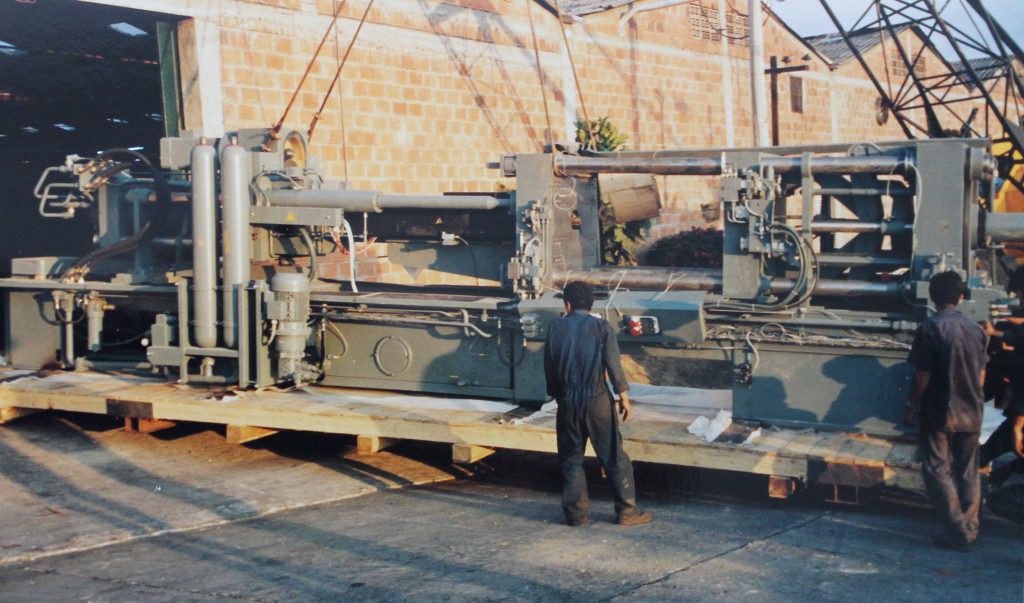
In 1978, one of the first plastic injection machines arrived in Manizales.

One of our most important milestones in technology

At Riduco, we made a landmark purchase not only for our company but also for Colombia. This was the acquisition of a 4.000-ton injection molding machine. This became a backup solution given the lack of such technology in the country and has since been instrumental in producing large parts. 

Today, we are leaders in automation within the domestic plastics industry, with one of the largest fleets of machines with integrated robots. This technological evolution has not only allowed us to increase efficiency and meet our customers' needs, but has also been key to remaining competitive against highly automated international industries.

“Throughout our history, we have been known for visiting trade shows and constantly seeking out cutting-edge technology in the form of robots, automation, and machinery. We're always seeking the latest innovations to better serve our customers,” says Irene Rivas Gómez, our company's Technical Manager. 

At Riduco, automation and technological growth are no longer an option, but an obligation. They are our response to the challenges of the future.
A biopolymer is a long chain of molecules (polymer) that originates from natural or renewable sources such as plants, animals, or microorganisms. Some common examples include cellulose (from plants), starch (extracted from corn or potatoes), proteins such as gelatin or casein, and polylactic acid (PLA). In short, its origin is biological or natural . However, it is important to note that a biopolymer may or may not be biodegradable.

Bioplastic , on the other hand, is a specific subset of biopolymers used in the manufacture of plastic products.

A biodegradable material is one that can decompose naturally in the environment thanks to the action of microorganisms such as bacteria and fungi. Some examples are paper, organic waste, and certain biodegradable plastics. The key point here is that its final destination is ecological , regardless of whether its origin is natural or synthetic. In other words, a biodegradable material does not have to be natural.

Key differences between biopolymer and biodegradable

  • The origin of the biopolymer is natural or renewable, while a biodegradable material can be either natural or synthetic.
  • A biopolymer may or may not be biodegradable, but a biodegradable material does decompose in nature.
  • A common example of a biopolymer is polylactic acid (PLA), while examples of biodegradable materials include compostable bags and paper.

Everyday examples of packaging and products

  • Compostable corn bags (PLA): Yes, they are biopolymers and biodegradable. They are made with polylactic acid, which decomposes under industrial composting conditions.
  • “Oxobiodegradable” oil bags: They are not biopolymers and are only partially biodegradable. They are composed of conventional plastic with additives that break them down, but they do not degrade completely or in an environmentally friendly way.
  • Soy wax cardboard packaging: They are both biopolymers and biodegradable. The cardboard and vegetable wax make the packaging completely compostable.
  • Recycled PET bottles: They are neither biopolymers nor biodegradable. Although they are recyclable, they are made from petroleum-derived plastic.
  • Covered in cornstarch: Yes, they are biopolymers and biodegradable, as long as they are composted properly.
  • Polystyrene foam packaging: They are neither biopolymers nor biodegradable. They are petroleum derivatives and highly polluting.

In summary, not everything biodegradable is natural , and not everything natural biodegrades easily in nature without the right conditions, such as in industrial composting.

Riduco hand in hand with sustainability

Our company has a long history of transforming plastic through the injection molding process, which has positioned us as a leading company nationwide. In line with market trends and thanks to the work of our innovation team, in 2018 we launched the project "Development and Application of Biodegradable Materials in Injection Molded Products."

With that goal in mind, we began researching the development of biodegradable materials worldwide. We wanted to apply these types of polymers to our products and thus propose developments that contribute to sustainability and environmental protection.

We prototyped various biodegradable resins from around the world, evaluating their technical characteristics and handling during processing. We also implemented a composting culture at our plant to analyze the polymers' actual behavior in a decomposition environment. This allowed us to compare actual results with supplier certifications and determine which biopolymers decompose most quickly based on their biomass content.

Bio-based resins , a family of biodegradable resins, have proven to be an alternative whose degradation begins in just a few months when they enter a composting environment. This makes them especially useful for single-use and short-cycle products.

One of our most promising research projects was the development of avoplast , a resin based on biopolymers derived from avocado seeds. The results were very positive for its application in injection-molded products.

One of our most promising research projects was the development of Avoplast, a resin based on biopolymers derived from avocado seeds.

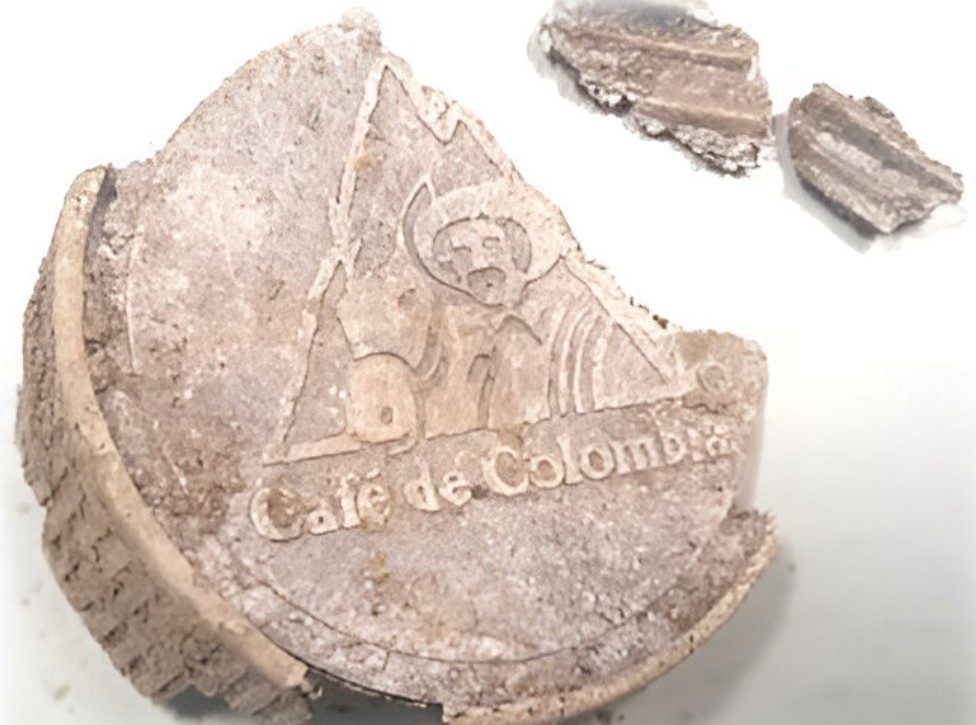
Thanks to the initiative of our Technical Manager, Dr. Irene Rivas , we proposed to our client Buencafé Liofilizado that they conduct pilot tests on the lids of their coffee jars. Today, this proposal has materialized in a prototype presented by the client, the result of the synergy between Riduco and Biofase , the developers of this resin.

With this proposal, we seek to support the environment, reduce our environmental footprint, and offer a sustainable solution for the production of organic products.

Riduco Innovation Team:

  • Dr. Irene Rivas, Technical Manager
  • Special Engineer Migdonia Solís, Director of Engineering
  • Special Engineer Fabian Ospina, Head of Production

Riduco, committed to our customers and the environment.

Have you ever wondered why some plastics are used for certain products, or why some have different textures, characteristics, or physical, chemical, and mechanical properties, are more rigid, or even smell different than others? At Riduco, we'll tell you what they're used for and the differences between them.

What is meant by plastic and why are there so many varieties?

First, we must begin by defining what a polymer is. These are produced by the union of hundreds of thousands of small molecules called monomers, which form enormous chains of the most diverse shapes. Some resemble noodles, others have branches. Still others resemble ladders, and still others are like three-dimensional networks. 

These materials are classified as natural, such as cotton, rubber, wood, wool, and cement, and synthetic, such as propylene, ethylene, and styrene.

Plastics are synthetic materials obtained from petroleum-derived compounds. Their adaptability is attributable to the wide range of polymers they comprise, each with unique properties. This variety means that plastics are found in virtually every aspect of our lives, from food bags to electronic devices. 

How are synthetic polymers classified?

Synthetic polymers are generally classified into two categories, thermoplastics and thermosetting resins.

Thermoplastics are long-chain polymers that soften when heated and can be molded under pressure. They solidify by cooling in air or by contact with the mold walls. They do not undergo chemical modification, so they can be remelted and processed after being in a solid state. Thermosetting resins, on the other hand, are materials characterized by cross-linked polymer chains, forming a resin with a three-dimensional structure that initially melts under the action of heat but undergoes an irreversible chemical change, becoming infusible and impossible to process.

The most relevant types of plastic and their uses

  1. Polypropylene (PP): Heat and chemical resistant, polypropylene is used in food packaging, textiles, automotive parts and medical equipment, furniture, household items, among others.
  2. High Density Polyethylene (HDPE): HDPE, known for its durability and strength, is used in the production of detergent bottles, toys, and pipes and boxes. 
  3. Low Density Polyethylene (LDPE): This type of plastic is flexible and is used in plastic bags, food wrappers, and plastic films.
  4. Polystyrene (PS): Polystyrene is a lightweight, rigid plastic used in the manufacture of disposable cups, food trays, thermal insulation, and household appliances. 
  5. Polyethylene Terephthalate (PET): This is one of the most common plastics. We find it in water bottles, soft drinks, and other products, as well as in certain fabrics. It's lightweight and durable.

Why is it important to know the types of plastic?

  • Recycling: Determining and understanding what type of plastic we are using simplifies its categorization and recycling, favoring environmental preservation.
  • Food safety: Knowing which plastics are suitable for food contact ensures safe handling.
  • Responsible consumption: By understanding the properties of each type of plastic, we can make more conscious purchasing decisions and reduce our environmental impact. Knowing this, we can now be responsible for their proper disposal.

What is reclaimed material?

Proper separation of plastic waste and components is key to ensuring their transformation into high-quality recycled materials, allowing for extended use and promoting a more responsible production model by reintegrating them as raw materials into new production processes. In this way, we underscore our commitment to the environment, adapting to the needs of today's market, and reducing our dependence on virgin resources.